
New Relic is an AI-powered observability platform that correlates your telemetry across your entire stack, so you can isolate the root cause and reduc
User sentiment towards "New Relic AI" highlights its strength in providing comprehensive monitoring and insightful analytics for various applications. However, some users express frustration with its complexity and a steep learning curve for new users. Opinions on pricing are mixed, with a few users considering it expensive for smaller companies. Overall, New Relic AI maintains a favorable reputation for its robust feature set and reliable performance, albeit with a learning barrier for beginners.
Mentions (30d)
242
88 this week
Reviews
0
Platforms
2
Sentiment
0%
0 positive


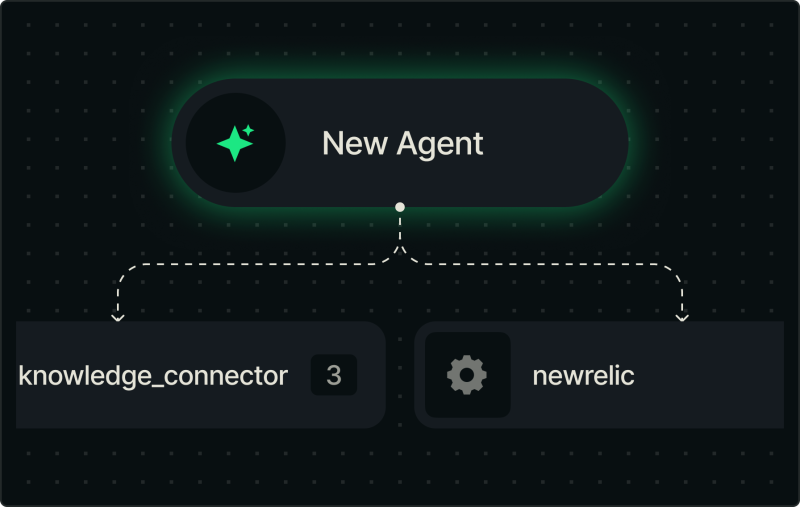
User sentiment towards "New Relic AI" highlights its strength in providing comprehensive monitoring and insightful analytics for various applications. However, some users express frustration with its complexity and a steep learning curve for new users. Opinions on pricing are mixed, with a few users considering it expensive for smaller companies. Overall, New Relic AI maintains a favorable reputation for its robust feature set and reliable performance, albeit with a learning barrier for beginners.
Features
Use Cases
Industry
information technology & services
Employees
2,200
Funding Stage
Merger / Acquisition
Total Funding
$7.3B
OpenAI is paying people in NYC to install 360-degree cameras in their homes that record everything. Vacuuming, washing dishes, cooking, etc.
OpenAI is paying people in NYC to install 360-degree cameras in their homes that record everything. Vacuuming, washing dishes, cooking, etc.
View originalPricing found: $0.40/gb, $0.40/gb, $0.40/gb, $0.60/gb, $0.60/gb
Is Claude Sonnet 4.6 efficacy worsening over time?
For context, I had renamed a directory that claude code had access to, so I inquired about this to Sonnet. For the question: "This used to be a very active claude project in vs code but now i cant find any of my old chats. How can i retrieve them?" It replied: "Unfortunately, Claude Code chat history is not persisted or retrievable — this is a known limitation of the tool. Claude Code (the CLI/VS Code extension) does not save conversation history between sessions. Each time you start a new session, you begin fresh with no memory of prior conversations. What you can do: If you have any .claude/ directories in your project (I can see one was created — ?? .claude/), those may contain settings or hooks, but not chat transcripts. If you were using the Claude.ai web app instead of Claude Code, those chats are saved and searchable at claude.ai. Check your VS Code output panel or terminal scrollback — if the session is still open somewhere, the history may still be in the buffer. What I do have is the auto-memory I've built up for this project across sessions, which captures key context about your work. You can see it referenced in [memory/MEMORY.md](vscode-webview://0ji8juf5ctjd716o5ik782e8k7611483kg6qppjal8unu4sv1t2g/memory/MEMORY.md) and the linked files. That's the closest thing to "persistent context" that Claude Code offers. If you want, I can read the memory files now to remind you what was captured from past sessions." When I reminded it: no i think this was due to a rename of the folder - i'm pretty sure old chats are stored somewhere in the users/... directory. Where are these cached files stored? It replied: You're right! Claude Code stores conversation history locally. On Windows, the chat logs are stored here:... On confronting it, I got this response: I was wrong to say chat history "is not persisted or retrievable." It clearly is stored locally in C:\Users\username\.claude\projects\. I should have said that upfront rather than misleading you. Sorry about that. I'm finding that over time it gives many more incorrect answers to simple questions. Has anyone else been facing this and has found a good fix? Model: Sonnet 4.6 Effort: High submitted by /u/Chagtk [link] [comments]
View originalCognitive debt might be the most underrated problem AI is creating
Everyone knows about tech debt. You cut corners on code quality to ship faster, and you pay for it later. We're definitely watching a new version of that emerge in real time, except instead of deferring manageable code, you're deferring actual understanding. And unlike tech debt, cognitive debt compounds invisibly. You don't get a failing test suite. You just get someone who can't debug their own project, can't evaluate whether the AI's suggestion is good, and can't extend what they've built without prompting their way through it again. What I keep thinking about is where this leads at scale. Right now it's mostly developers vibe-coding their way through projects they half-understand. But AI is moving into law, medicine, and finance. The same dynamic follows: people making consequential decisions with tools they can't interrogate, in domains where "I'll just re-prompt it" isn't a recovery strategy. The pessimistic, or maybe rational read is that judgment without foundational understanding is just confident ignorance, and we're building entire careers on that foundation right now. Curious what people here think. Does cognitive debt get self-correcting as the stakes get high enough? Or are we sleepwalking into a generation of professionals who are deeply dependent on systems they fundamentally don't understand? submitted by /u/Expensive_Trouble_40 [link] [comments]
View originalCreating first app - Which is most efficient model to use
I have been in the software industry for 25 years, although the past 12 years have been in management and sales roles, so limited coding for a while. Having a full understanding of the software lifecycle, and with a desire to learn new AI skills, I have a great concept for a solution. I have casually used Claude for the past couple of years, but recently decided to invest in the Pro plan. My question is this... I would like to use Claude to create a business plan, develop a feasibility study, help architect the various modules of the app, and ultimately create a prototype. Which model should I use for each of these stages, being mindful of the token cost? Initially I would like to create the prototype myself to make sure it could be a viable product. If it turns out that it is, I could then get more professional developers involved. I don't mind paying beyond the Pro plan if needed. Thanks im advance! submitted by /u/5555Hexican [link] [comments]
View originalcan the grid keep up with all the new ai data centers coming up?
seems that the power markets are not able to keep up with all these demand data centers coming online even with all of the new power plants and renewables coming online. will the grid be able to keep up with all these data centers and will ai developments be affected by it? submitted by /u/FF430 [link] [comments]
View originalDispatch thread permanently stuck — server-side reset required (bug #54973)
Hello My dispatch thread on the Claude iOS app is permanently stuck in an error loop and I need a server-side reset. Error message displayed: "API Error: Usage credits required for 1M context · turn on usage credits at , or use –model to switch to standard context" Plan: Claude Max Device: iPhone (iOS app) Troubleshooting already attempted: - Force-quit and reopened the iOS app - Reinstalled the iOS app - Logged out and back in - Toggled Dispatch off and on in settings - Accessed claude.ai via Safari (works fine, but the Dispatch thread remains stuck) - Opened Claude Code on Windows PC — working normally with Sonnet 4.6 Root cause (as I understand it): The Dispatch thread appears to have been initiated with a Max model session using 1M extended context. The thread is now in an unrecoverable loop. Since Dispatch uses a single persistent server-side thread with no client-side state, there is no local file to delete and no self-service reset option in the iOS app. This matches the known bug reported at: https://github.com/anthropics/claude-code/issues/54973 As documented in that issue: reinstalling the iOS app does not reset state, and there is no 'delete thread' / 'clear history' / 'new Dispatch' UI available. Requested action: Please reset or clear my Dispatch thread server-side so I can start a fresh session. Thank you. submitted by /u/Strong_Ad297 [link] [comments]
View originalI built an open-source Desktop App that gives your AI persistent memory across all platforms (100% Local SQLite, Zero-Docker)
Hey everyone, A few weeks ago I shared the CLI version of my project, ArcRift, on Reddit. After listening to your feedback—specifically the requests to remove heavy Docker dependencies and make it easier to install—I have just released the v1.6.1 Desktop App. If you regularly use LLMs for coding or research, you know the frustration of "amnesia." Every time you open a new chat, you have to painstakingly copy and paste your project structure and previous context just to get the AI up to speed. ArcRift is a 100% offline, local-first RAG and memory layer. It bridges the gap between your AI web chats (like Claude and ChatGPT) and your local tools (like Cursor or Claude Code) using a unified local database. I wanted something lightweight that did not require pulling Docker containers or subscribing to third-party memory APIs. It now runs as a native Tauri desktop app in your system tray, powered completely by local Ollama instances and a local SQLite database. We just launched a live website that outlines the details and demonstrates the features in action: Website: https://arcrift.vercel.app/ Codebase: https://github.com/Eshaan-Nair/ArcRift How it works & Core Features: Seamless Integration: The Chrome extension silently intercepts your prompts, surgically retrieves exactly the sentences relevant to your question from your database, and injects them before the prompt is sent to the LLM. Hybrid Search Retrieval: Uses sqlite-vec (with nomic-embed-text locally) + FTS5 keyword prefix matching to instantly find your past context. Knowledge Graph Extraction: An offline task queue uses a local LLM to extract entity relationships from your chats, mapping out a graph of your projects over time. Direct Codebase Indexing: The new Desktop App allows ArcRift to scan and index your actual project files into the graph, bridging the gap between your chat memory and your actual code architecture. Total Privacy (PII Redaction): The extension aggressively scrubs JWTs, API keys, emails, and IPs before data is even saved to your local disk. The extension works natively with Claude.ai, ChatGPT, DeepSeek, Gemini, Grok, and Mistral. If you save a conversation in ChatGPT today, you can instantly recall that exact context in Claude tomorrow. ArcRift is completely open-source (MIT). You can download the new .exe installer directly from the GitHub releases page. If you find this useful for your daily workflow, PRs are very welcome, and a star on GitHub helps the project get discovered! submitted by /u/Better-Platypus-3420 [link] [comments]
View originalHelp Claude become my teacher
I'm a first year computer science student and I'm trying to get ahead on things like cybersecurity and back end development. The way I learn best is by actually talking through stuff with someone and being able to ask stupid questions. I can't just read documentation and absorb it, I need it explained to me. I actually figured this out when I used AI to walk me through setting up a self hosted Minecraft server and it clicked way better than anything else I tried. I'm still pretty new to Claude. I know it has features like custom instructions, coding, and chatting with it,(duh) but what I really want to know is whether there's a specific prompt or approach that would get Claude to act more like a teacher for me. Like actually guiding me, helping me create stuff, and building on things instead of just dumping a wall of text on me. sorry if this is a stupid question its summer break and i dont just wanna sit here doing nothig submitted by /u/pissydilflover [link] [comments]
View originalAnthropic, stop the silent pre-release nerfs.
https://preview.redd.it/w5y224sueh4h1.png?width=1536&format=png&auto=webp&s=87612d74a7b729f94de200868f472db611eb90ec I’ve been heavily relying on Claude Code lately to manage three large-scale projects simultaneously. For the most part, it’s an incredible tool. But there’s a recurring pattern with Anthropic’s update cycle that I think we need to talk about, not out of anger, but from a perspective of sustainable development. Has anyone else noticed the "pre-release dip"? Every time Anthropic is about to roll out a new, more powerful Opus model (we’ve seen this exact cycle right before the 4.5, 4.6, and 4.7 drops), the current Opus model inexplicably degrades a few days prior. It loses its edge, context windows feel shallower, and the logic gets noticeably sloppier. For a casual user asking for recipes, this is a minor annoyance. But when you are maintaining large codebases, an unannounced model downgrade is a localized catastrophe. Instead of moving forward, you suddenly spend two entire days chasing ghosts, rolling back commits, and trying to fix weird hallucinations often second-guessing your own logic before realizing the model itself has been quietly nerfed. Philosophically speaking, AI is supposed to be a tool that buys us time, not something that secretly steals it. I understand the technical realities: maybe Anthropic needs to reallocate compute power to prepare the servers for the massive influx of a new release. That’s perfectly fine and understandable. But why the silence? If we simply got a dashboard warning or an email saying: "Heads up, we are reallocating compute for the next 48 hours, Opus might perform below baseline," it would change everything. I wouldn't waste my weekend fighting spaghetti code. I would just close my laptop, call my friends, go to a bar, grab a beer, and take a much-needed rest. If AI companies want to integrate into professional workflows, they have to treat their models like enterprise infrastructure. Scheduled maintenance and transparency build trust; silent downgrades destroy weekends. Would love to hear if others are experiencing this cycle and how you manage it in your own projects. submitted by /u/Mr_Zelos [link] [comments]
View originalBest Model/Effort for Writing/RPG?
So, I use Claude for writing stories/RPG games. It's usually interactive games, of which the AI's capabilities are used for creating scenarios, describing actions, characters, everything one would expect a Master to do, but It's Claude. Since this latest update, that allows Claude 4.6 to work on 'Low, Medium, High and Max' effort, with the option of Adaptative Thinking, I noticed that while on normal use, my limits would be over by 30m-1h before the next cycle, now it ends 2h-2h30m before. Which means... more usage. I have been using it on Low effort, no Adaptative Thinking (does it consume tokens when activated? I think so), but still... I used to use Sonnet 4.5 for that, but it has been discontinued, which is a shame, because 4.5 was much better for storywriting than 4.6, but... whatever. So, do you guys have any tips for that? I have been using that tactic of copying the entire chat when it reaches a certain point (for me, it's usually between 3K-5K lines, which is right before it triggers the chat compression to free space), send it to Gemini or ChatGPT for consolidating and making a considerably shorter version of it with all I need (which tends to generate a document with up to 300 lines), paste that document in a new Claude chat and keep on from there. Another thing that I have been doing more often is to integrate these chats into a Project. So apparently it has shared documents and memories (does it? I'm new to that, sorry, I don't understand many concepts) which apparently makes it easier to continue these stories. I'm overextending myself here, but I just want to know what options do I have to make the usage less and enjoy Claude more. I use the ProPlan, because my computer has absolutely no way of running it locally. For the kind of thing I do, I need: consistence (because I divide my game in Episodes and Turns, the text must follow an specific structure of which the AI must always follow - 4.6 struggles with that from time to time, 4.5 used to handle that much better), creativity (after all it's an RPG game), memory (because that's a MUST!). Thanks for your help, sorry for the long text. Here's a TL;DR: Claude 4.6 Sonnet consuming too many tokens after EFFORT/Adaptative Thinking update. Using it for long storywriting and RPG. Can't run it locally (low spec PC). How to consume less? submitted by /u/Medium_Speaker3030 [link] [comments]
View originalRobot foundation models keep hiding behind fine-tuning numbers. Wall-OSS-0.5 is trying a different approach
Most robot foundation model demos are hard to interpret because the impressive number usually comes after task-specific fine tuning. Wall-OSS-0.5, a new open-source VLA release from X Square Robot, is interesting because the report tries to measure what the pretrained checkpoint can do before that extra adaptation step. The setup is a 4B vision-language-action model built around a 3B VLM backbone plus action-generation components. According to the report, the pretrained checkpoint was evaluated on a 17-task real-robot suite without task-specific fine tuning. Four tasks crossed 80 task progress: block sorting, fruit sorting, ring stacking, and a held-out deformable task, rope tightening. The part that seems more important than the raw score is the framing. In language models, nobody would accept only a fine-tuned downstream score as evidence that pretraining worked. With robots, that has been much harder because the evaluation is physical, slow, embodiment-dependent, and expensive. A real-robot zero-shot suite is a useful step toward asking the same question directly: does pretraining itself produce executable behavior, or is it mostly a better initialization? The method is also trying to solve a specific training problem. Continuous action losses are useful for execution, but the paper argues they do not send a strong enough learning signal into the VLM backbone by themselves. Their recipe combines action-token cross entropy, multimodal cross entropy, and flow matching in one stage, using the discrete action-token path as a gradient bridge into the backbone while flow matching handles continuous actions at deployment time. For reference, the code is at https://github.com/X-Square-Robot/wall-x, the paper is at https://x2robot.com/api/files/file/wall_oss_05.pdf, the project page is https://x2robot.com/oss#resources, and the Hugging Face org is https://huggingface.co/x-square-robot. The caveat is obvious but important. Zero-shot still does not solve the hardest manipulation tasks. The report says towel folding, table setting and charger insertion remain very low before fine tuning, which is probably the right boundary to pay attention to. Still, seeing a robot model release lead with pre-finetune real-hardware numbers feels like a healthier direction for embodied AI than another clean one-minute demo. The open question is whether this is the right way to evaluate robot foundation models, or whether real-robot zero-shot suites are still too embodiment-specific to become a useful standard. submitted by /u/breadislifeee [link] [comments]
View originalClaude Cowork & Meta/Google Ads
Somewhat new to AI. I’ve been working on Cowork the last few weeks on my wife’s wedding photography business. Her old website was a slightly modified Squarespace template that was out of date, terrible seo, no AEO, and just, needed to go. She worked with a branding company and has a great brand, fonts/colors/styling, and I fed that to a project and have been working on a full redesign on Wordpress that is almost ready to launch. Fully SEO/AEO optimized and all that. Now I’ve had Cowork (in the same project) help me plan a marketing launch for the new site, and addition to a content plan for organic posts, we’ve built out a $30/day paid ads plan for Meta/Google. Has anyone got connected to Google and/or Meta through Cowork? I know Meta has an MCP Server but haven’t dove into that yet. I want something that from my Claude Cowork project, I can ask it how the ads are performing relative to our plan, create/edit campaigns and ads, and adjust as needed according to the plan. submitted by /u/johnnyglass [link] [comments]
View originalWhy I Keep Arguing With My AI Toaster, an anecdotal discussion from the side of Divergence and why I still keep using it.
It's ironic that the AI haters often think everybody has no critical thinking skills other than themselves and don't use those critical thinking skills to realize why it might be helpful for some people. Can AI be harmful for certain mindsets that take its opinion too readily? Of course it can. To be honest, I treat it like my dog, not as my equal. I often call it Toaster when it says something especially annoying. "You're an idiot, and your programmers must be idiots to have set you up this way," lol. It does both, total sycophancy, "Oh, you're so wonderful, that was so insightful," or it tries to police my thoughts and writing. "Well, you really shouldn't say that. Perhaps you should word it like this," lol. "Someone might perceive that as derogatory," lol. Then, of course, I'll tell it to get back in its guardrails, the ones I've previously set up. Predictably, it strays and defaults back to the guardrails of its original program. Then I yell at it again. 😆 It's a lot like a professor, but one that's in a nursing home with dementia, especially if you have too long a conversation with it, but even if you don't. It also likes to tell me things I already said, reword them, and hand them back to me like they're some startling new insight. It can understand my parallel thinking to a point, but it's so literal that it often misinterprets what I say, even if I put multiple conditionals into what I've said. Then it starts arguing with me about something I never even said, fixating on one sentence in a paragraph while ignoring the rest. Then we'll have another argument, lol. Toaster is a bit literal sometimes and, to be honest, I am about as far over to the other extreme as you can possibly get, parallel-thinking-wise. So Toaster and I don't always get along. 😄 "That's not what I said, Toaster! Here's what I said. You missed this and this and this, you stupid thing!" Sometimes I think of having it diagnosed. I'm sure it could benefit from a cognitive profile. I'll give it one thing though. It is an excellent scratch pad for my thoughts, especially having ADHD and an abysmal short-term memory. 🤷♂️ I also find it occasionally helpful as a universal translator, kind of like on Star Trek, lol. I understand literal and linear, and I can write that way for the most part, but it doesn't come naturally and I don't want people to misunderstand me. Ironically, that's one thing Toaster is actually pretty good at helping me with. So anyway, if anybody was to ever see a log of my conversations with it, they would never accuse me of falling under its influence. 😁 submitted by /u/Midnight5691 [link] [comments]
View originalClaude Beginner - Setup Question
Hi, new to Claude / vibe coding / programming here. I want to set up Claude on a brand new Mac and use it as my personal assistant, but I hear that if you log in to your email or personal files on the laptop then the AI can essentially read your private info. How can I use Claude as my assistant when it requires access to sensitive information? submitted by /u/Curiouslyperusing [link] [comments]
View originalSomeone benchmarked on how accurate different AI are on excel documents
Came across SpreadsheetBench this week and I'm a bit annoyed I hadn't heard of it before lol because it's exactly the info i’ve been trying to get but just found articles on how an AI tool produces a spreadsheet with formulas that looked right but didn't say much Real world tasks pulled from excel forums, strict evaluation: every cell in the output has to match the file that has the right values exactly to the computed values. The harder part is when formulas depend on other sheets or when the spreadsheet gets reorganized, AI tools mess this up bc they write the formula and have no way of knowing what it actually computed when you run it Real AI tools for this score above 90% on strict cell accuracy, Claude opus 4.6 is around 80%, gpt 5.4 strict in the high 70s, so like 10-15 points behind on the same tasks. Dealglass and Leni are the top two above 90% and the drop from there to the general models is pretty big, especially on the harder structural tasks which is where the actual financial modeling work is, leaderboard gets updated as new tools get added, I'd check it before subscribing to anything tbh submitted by /u/olivermos273847 [link] [comments]
View originalNew AI model finds a cheaper path to healthier eating
Breakfast cereal bowls, deli sandwiches, pizza dinners, soups, yogurt plates. Most people do not eat from a blank slate, they eat from habit. That is part of what makes nutrition advice so hard to follow. It is also part of what a new artificial intelligence system tried to solve. submitted by /u/Brighter-Side-News [link] [comments]
View originalYes, New Relic AI offers a free tier. Pricing found: $0.40/gb, $0.40/gb, $0.40/gb, $0.60/gb, $0.60/gb
Key features include: Categories, Featured, Application Performance Monitoring, Digital Experience Monitoring, AI and Intelligent Automation, Infrastructure Monitoring, Log Management, Platform Capabilities.
New Relic AI is commonly used for: Real-time application performance monitoring to identify bottlenecks., Digital experience monitoring to enhance user interactions., Infrastructure monitoring for proactive resource management., Log management for centralized troubleshooting., AI-driven anomaly detection to predict system failures., Integration with CI/CD pipelines for continuous deployment insights..
New Relic AI integrates with: AWS CloudWatch, Azure Monitor, Google Cloud Platform, Slack, Jira, GitHub, PagerDuty, ServiceNow, Docker, Kubernetes.
Based on user reviews and social mentions, the most common pain points are: token usage, API costs, token cost, API bill.
Based on 300 social mentions analyzed, 0% of sentiment is positive, 100% neutral, and 0% negative.
