
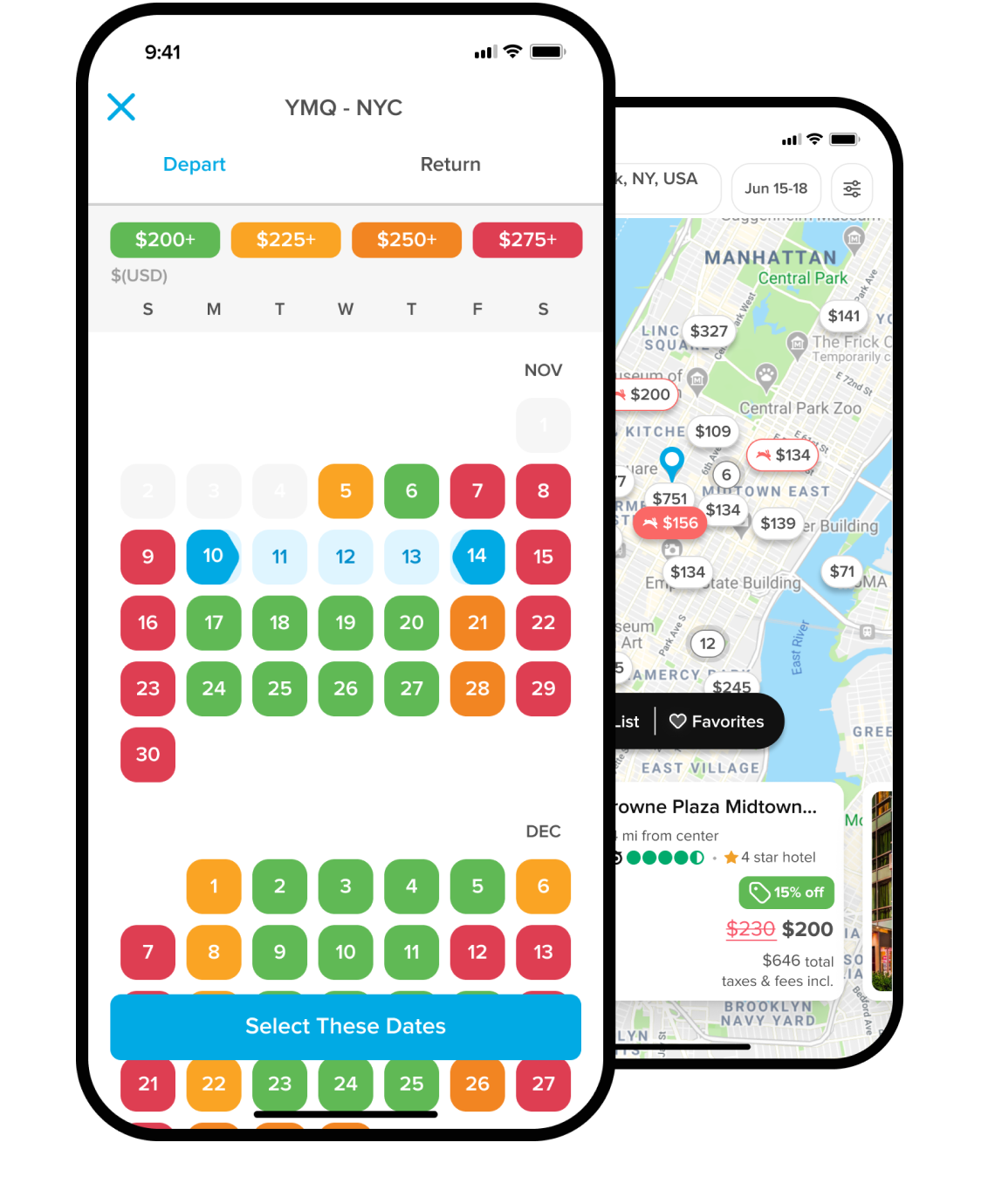
Join 120 million travelers in planning your next trip. Get the best price on hotels, homes, flights, and car rentals.
There is limited available data specifically detailing the strengths, complaints, and pricing sentiments regarding Hopper AI, as the social mentions primarily relate to Hopper AI's coverage on platforms like YouTube and discussions about AI in general, with only indirect reference to Hopper AI. However, the overall context suggests that there might be an intrigue around AI capabilities, partially influenced by broader discussions in media and other AI platforms. Given the current information, a conclusive reputation or user feedback specific to Hopper AI's offerings is not readily apparent.
Mentions (30d)
0
Reviews
0
Platforms
2
Sentiment
14%
1 positive
There is limited available data specifically detailing the strengths, complaints, and pricing sentiments regarding Hopper AI, as the social mentions primarily relate to Hopper AI's coverage on platforms like YouTube and discussions about AI in general, with only indirect reference to Hopper AI. However, the overall context suggests that there might be an intrigue around AI capabilities, partially influenced by broader discussions in media and other AI platforms. Given the current information, a conclusive reputation or user feedback specific to Hopper AI's offerings is not readily apparent.
Features
Use Cases
Industry
information technology & services
Employees
1,100
Funding Stage
Venture (Round not Specified)
Total Funding
$737.0M
Pricing found: $25, $25, $5, $5, $200
Persistent memory changes how people interact with AI — here's what I'm observing
I run a small AI companion platform and wanted to share some interesting behavioral data from users who've been using persistent cross-session memory for 2-3 months now. Some patterns I didn't expect: "Deep single-thread" users dominate. 56% of our most active users put 70%+ of their messages into a single conversation thread. They're not creating multiple characters or scenarios — they're deepening one relationship. This totally contradicts the assumption that users are "scenario hoppers." Memory recall triggers emotional responses. When the AI naturally brings up something from weeks ago — "how did that job interview go?" or referencing a pet's name without being prompted — users consistently react with surprise and increased engagement. It's a retention mechanic that doesn't feel like a retention mechanic. The "uncanny valley" of memory exists. If the AI remembers too precisely (exact dates, verbatim quotes), it feels surveillance-like. If it remembers too loosely, it feels like it didn't really listen. The sweet spot is what I'd call "emotionally accurate but detail-fuzzy" — like how a real friend remembers. Day-7 retention correlates with memory depth. Users who trigger 5+ memory retrievals in their first week retain at nearly 4x the rate of those who don't. The memory system IS the product, not a feature. Sample size is small (~800 users) so take this with appropriate skepticism. But it's consistent enough that I think persistent memory is going to be table stakes for AI companions within a year. What's your experience with memory in AI conversations? Anyone else building in this space? submitted by /u/DistributionMean257 [link] [comments]
View originalNobody’s talking about what Pixar’s Hoppers is actually saying about AI
Just watched Hoppers and I’m surprised this hasn’t been picked up more widely. The parallels with AI and its risks are hard to ignore once you see them. A few things worth noting: The setup mirrors our current moment almost exactly. The lead scientist developing the world-changing technology is called Dr. Sam. Her invention lets humans cross a communication barrier that was previously impossible: entering the animal world through embodiment. LLMs did the same thing for the digital world. We can now navigate machines through natural language. The alignment problem is right there on screen. Mabel uses the technology to reach her goal, but the technology has its own logic and momentum. What it produces isn’t what she intended. The governance message is explicit. No single person or group should control a technology this powerful even when we have good intentions. The real cautionary tale in Hoppers isn’t aimed at the tech builders. It’s for the users, the ones who convince themselves that it is the only way to solve the world’s problems. The consequences in the film flow from that belief. Not from the tech itself. Curious if anyone else read it this way. submitted by /u/GuacaGuaca [link] [comments]
View originalPricing found: $25, $25, $5, $5, $200
Key features include: Rewards, Get deal alerts on the app.
Hopper AI is commonly used for: Predicting flight prices to find the best time to book, Setting up alerts for price drops on specific routes, Comparing hotel prices over time to identify trends, Finding the cheapest travel dates based on user preferences, Receiving personalized travel recommendations based on past trips, Tracking price changes for car rentals in specific locations.
Hopper AI integrates with: Google Flights, Expedia, Kayak, Airbnb, TripAdvisor, Booking.com, Skyscanner, Travelocity, Facebook, Instagram.
