Harness AI excels as an end-to-end software delivery platform powered by AI, ideal for optimizing CI/CD pipelines and predictive analytics. In contrast, Sentry AI focuses on robust error tracking and performance monitoring with strong community support, as evidenced by its 43,695 GitHub stars.
Best for
Harness AI is the better choice when looking to automate and enhance CI/CD pipelines across multi-cloud deployments, especially for larger teams seeking an AI-driven approach.
Best for
Sentry AI is the better choice when the priority is real-time error tracking and performance monitoring, especially for smaller to mid-sized teams that benefit from robust integration options and community support.
Key Differences
Verdict
Harness AI is ideally suited for enterprises needing comprehensive AI integration into their development lifecycle, while Sentry AI caters more towards teams requiring detailed error and performance management. Teams should choose based on their primary focus: full-scale AI-driven deployments versus focused error and performance tracking.
Harness AI
Harness is a unified, end-to-end AI software delivery platform to manage the SDLC using purpose-built AI agents.
Users of Harness AI appreciate its multi-agent architecture, particularly its capacity for enhancing long-running applications through autonomous iterations. However, there are few noted discussions about its replication and implementation rather than comprehensive user reviews. Pricing sentiment is not explicitly discussed, but given the open-source nature, it might be perceived as cost-effective for developers. Overall, Harness AI has a positive reputation among developers for its capability to optimize and automate complex coding tasks, though it's primarily discussed in niche technical communities.
Sentry AI
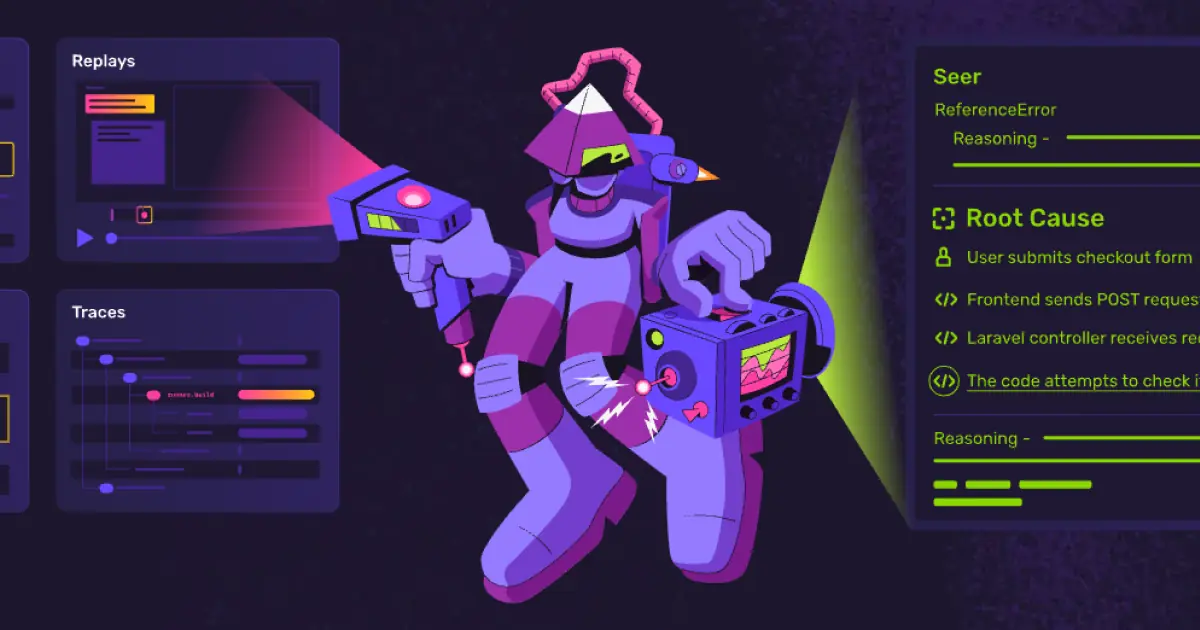
Application monitoring software considered "not bad" by millions of developers.
Sentry AI has been praised for its integration with Anthropic's Claude Managed Agents, which reportedly enhances the speed and management efficiency of AI deployment. However, there are some concerns about context bloat when using it alongside other tools such as Claude Code for complex server setups. Pricing sentiment is not explicitly discussed in the mentions, suggesting it may not be a significant concern or particularly differentiating factor at present. Overall, Sentry AI appears to have a positive reputation, particularly in terms of advanced AI functions and prompt injection detection capabilities, although feedback on direct user experiences is limited.
Harness AI
-78% vs last weekSentry AI
+50% vs last weekHarness AI
Sentry AI
Harness AI
Sentry AI
Harness AI
Sentry AI
Pricing found: $0, $26/mo, $26/mo, $80/mo, $80/mo
Harness AI (8)
Sentry AI (10)
Only in Harness AI (10)
Only in Sentry AI (10)
Shared (9)
Only in Harness AI (11)
Only in Sentry AI (6)
Harness AI
Sentry AI
Harness AI
Sentry AI
Harness AI

Load Testing Vs Stress Testing | Resilience Testing | Harness
Apr 9, 2026

Enable self-service environments with Harness Internal Developer Portal
Apr 8, 2026

What is Chaos Engineering? Explained in 60 seconds | Resilience Testing | Harness
Apr 8, 2026

Performance Testing vs Load Testing: Simple Difference
Apr 3, 2026
Harness AI

Sentry AI

Harness AI
Sentry AI
Harness AI
I replicated Anthropic's Generator-Evaluator harness to build a website through 12 adversarial AI iterations - here's the result and what I learned
Anthropic recently published their [harness design for long-running apps](https://www.anthropic.com/engineering/harness-design-long-running-apps) — a multi-agent architecture inspired by GANs where a Generator builds code and an Evaluator critiques it in a loop. I built my own version using Kiro C
Sentry AI
I built a solo AI platform from Bahrain with no funding, no team and no ad spend - here's what's inside it after 4 months
https://reddit.com/link/1sxotqx/video/xlaqd9i8guxg1/player I'm a self-taught developer, 39 years old, based in Bahrain. Four months ago I started building AskSary - a multi-model AI platform with a persistent memory layer that sits above all the models. The core idea: the model is not the identity
Shared (3)
Only in Harness AI (2)
Harness AI is better suited for cloud deployment integrations given its robust support for multi-cloud CI/CD pipelines.
Harness AI uses a subscription model with a per-seat cost, while Sentry AI offers tiered pricing starting at $26/mo, which may be more straightforward and cost-effective for smaller teams.
Sentry AI has better community support as evidenced by its 43,695 GitHub stars, indicating high engagement and contributions from developers.
Yes, teams can use Harness AI for CI/CD optimization and Sentry AI for error tracking, leveraging their integrations with platforms like Docker and GitHub.
Sentry AI is generally perceived as easier to get started with due to its clear pricing tiers and dedicated demos for new users.


![Nothing But [Inter]net 2026 Highlights](https://i.ytimg.com/vi/1a1wCQcLEdI/mqdefault.jpg)