
The Gutenberg Moment: How AI is Revolutionizing Information Access
The Gutenberg Moment: How AI is Revolutionizing Information Access
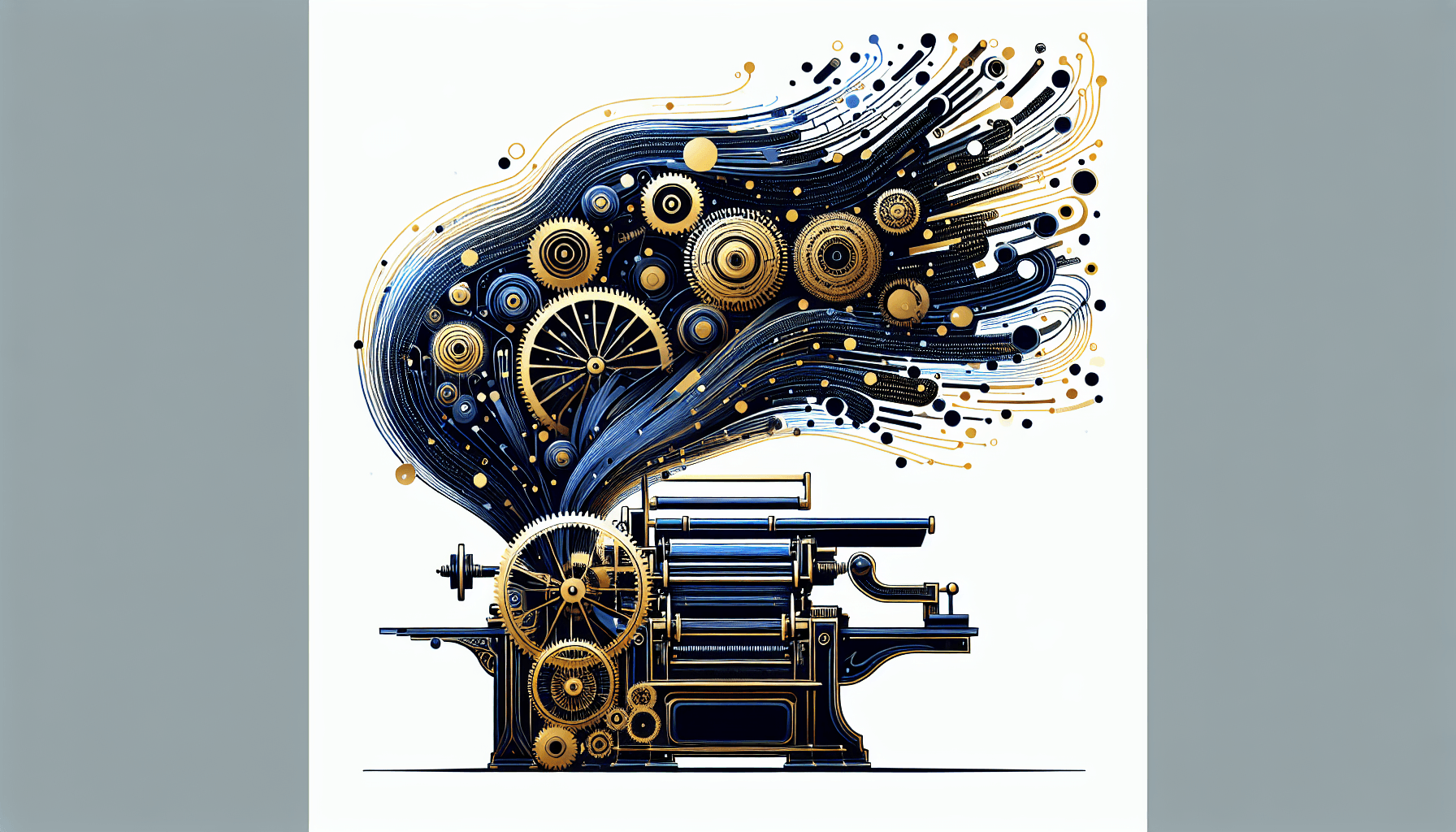
Just as Johannes Gutenberg's printing press democratized knowledge 580 years ago, we're witnessing another transformative shift in how humanity accesses and processes information. Today's AI systems are creating what industry leaders call a "Gutenberg moment"—a fundamental restructuring of information flow that promises to reshape society, economics, and human potential itself.
The parallels are striking: Gutenberg's movable type made books affordable and accessible, breaking the monastery's monopoly on knowledge. Similarly, AI is dismantling traditional gatekeepers of information, from search engines to academic journals, creating new pathways for discovery and understanding.
The New Information Architecture
Leading AI companies are positioning themselves as the architects of this transformation. Aravind Srinivas, CEO of Perplexity, recently highlighted how his company is deploying "the most widely deployed orchestra of agents by far" with their Computer platform across iOS, Android, and web interfaces. This represents a fundamental shift from static search to dynamic, conversational information retrieval.
The implications extend far beyond improved search experiences. Jack Clark, Co-founder at Anthropic, has taken on a new role as "Head of Public Benefit" specifically to address the "societal, economic and security impacts" of AI systems. His focus on generating and sharing information about AI's broader effects reflects industry recognition that we're not just building better tools— we’re reshaping civilization's information infrastructure.
Fei-Fei Li, Co-director of Stanford HAI and CEO at World Labs, captures the transformative potential with her observation that "our imaginations are unbounded, so should the worlds we create be." This vision of limitless creative and informational possibilities echoes the Renaissance explosion of knowledge that followed Gutenberg's innovation.
The Economics of Information Transformation
The financial stakes of this transformation are enormous, with implications that extend years into the future. Ethan Mollick, Professor at Wharton, offers a sobering analysis of the investment landscape: "VC investments typically take 5-8 years to exit. That means almost every AI VC investment right now is essentially a bet against the vision Anthropic, OpenAI, and Gemini have laid out."
This observation reveals the high-stakes nature of the current AI landscape. Unlike the gradual adoption of Gutenberg's printing press, today's AI transformation is happening at venture capital speed, with billions of dollars wagering on competing visions of how information will flow in the future.
The concentration of power among frontier AI labs—Google, OpenAI, and Anthropic—mirrors the early printing press era when a few key innovators controlled the technology. Mollick notes that "the failures of both Meta and xAI to maintain parity with the frontier labs" suggests that "recursive AI self-improvement, if it happens, will likely be by a model from Google, OpenAI and/or Anthropic."
Beyond Search: The Scientific Revolution
Perhaps nowhere is the Gutenberg analogy more apt than in scientific research. Aravind Srinivas reflects on AlphaFold's impact: "We will look back on AlphaFold as one of the greatest things to come from AI. Will keep giving for generations to come." This echoes how Gutenberg's press accelerated scientific progress by making research more accessible and collaborative.
AlphaFold's prediction of protein structures represents exactly the kind of knowledge democratization that defines Gutenberg moments. What once required years of expensive laboratory work can now be accessed instantly, enabling researchers worldwide to build upon each other's discoveries at unprecedented speed.
The Stakes Are Rising
The urgency surrounding this transformation is palpable among industry leaders. Jack Clark emphasizes that "AI progress continues to accelerate and the stakes are getting higher," prompting his shift toward public education and information sharing. This mirrors the social upheaval that followed the printing press, when new information flows challenged established power structures and created both opportunities and risks.
The speed of change demands immediate attention to infrastructure and societal impacts. As Aravind Srinivas acknowledges with Perplexity's rapid deployment, "there are rough edges in frontend, connectors, billing and infrastructure that will be addressed in the coming days." The rush to deploy these transformative technologies reflects both the immense opportunity and the competitive pressures driving the industry.
Cost and Infrastructure Implications
The economic efficiency of this new information architecture extends beyond user experience to operational costs. Unlike the printing press, which required significant physical infrastructure, AI-powered information systems can scale globally with relatively modest incremental costs per user. This creates unprecedented opportunities for cost optimization in information processing and retrieval.
For organizations managing AI deployments, understanding these cost dynamics becomes crucial. The "orchestra of agents" that Srinivas describes requires sophisticated infrastructure management, billing systems, and connector technologies—all of which represent new categories of operational expense that didn't exist in traditional search paradigms.
Actionable Implications for Organizations
The Gutenberg moment in AI presents several strategic imperatives for forward-thinking organizations:
• Invest in AI literacy: Just as the printing press required new skills in reading and writing, the AI revolution demands new competencies in prompt engineering, AI tool integration, and intelligent information synthesis
• Rethink information architecture: Traditional knowledge management systems built around static documents and hierarchical databases may become obsolete as conversational AI agents enable more dynamic information discovery
• Prepare for cost model shifts: As AI agents handle more information processing tasks, organizations need visibility into these new cost structures and optimization opportunities
• Consider the competitive timeline: With Mollick's observation about 5-8 year VC cycles, organizations have a narrow window to position themselves advantageously in the emerging information landscape
The Gutenberg press didn't just make books cheaper—it fundamentally altered human civilization by democratizing knowledge. Today's AI transformation promises an even more profound shift, compressing the timeline for innovation while expanding the boundaries of what's possible. Organizations that understand and adapt to these new information flows will thrive; those that don't risk becoming as obsolete as medieval scribes.