
AI as the New Printing Press: Transforming Information at Scale
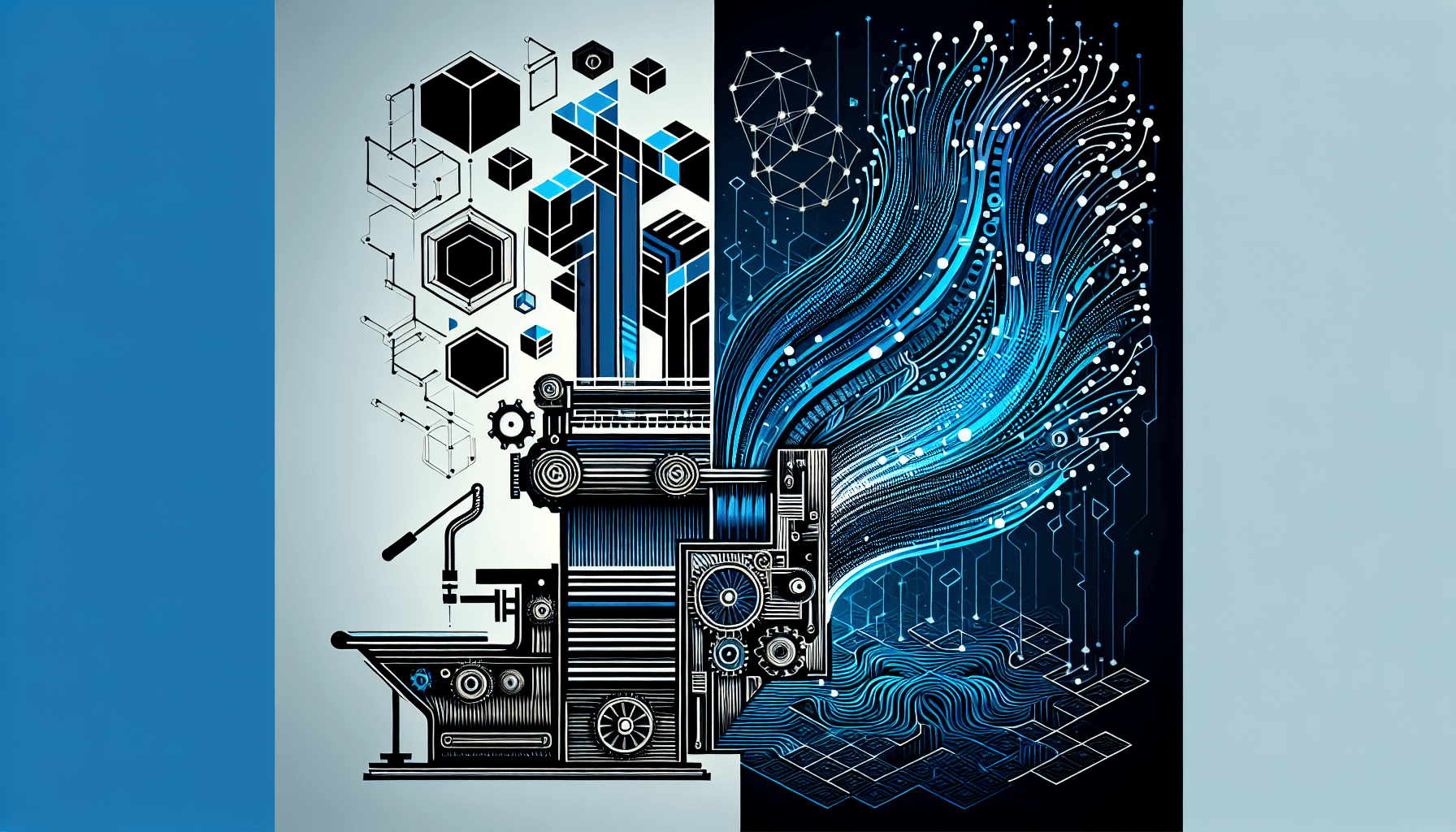
The Gutenberg Moment: How AI is Democratizing Information Creation
Just as Johannes Gutenberg's printing press revolutionized the spread of knowledge in the 15th century, artificial intelligence is creating another watershed moment in how we generate, process, and distribute information. The parallel isn't just poetic—it's profound. Both technologies fundamentally altered who could create content, how quickly information could spread, and what kinds of knowledge became accessible to the masses.
Information Production at Unprecedented Scale
The printing press transformed society by making books affordable and widely available, breaking the monopoly of hand-copied manuscripts controlled by religious and academic elites. Today, AI is doing something remarkably similar with information creation itself.
Jack Clark, co-founder at Anthropic, has observed this transformation firsthand. "AI progress continues to accelerate and the stakes are getting higher," Clark notes, emphasizing his shift to "spend more time creating information for the world about the challenges of powerful AI." This pivot reflects a broader recognition that we're witnessing an inflection point in how information is produced and consumed.
The scale comparison is staggering:
- Medieval scribes: Could copy 2-3 pages per day
- Printing press: Enabled 3,600 pages per day by 1500
- Modern AI: Can generate millions of words per day across multiple languages and formats
Breaking Down Barriers to Content Creation
The printing press democratized literacy by making books cheaper and more accessible. AI is democratizing content creation by removing traditional barriers:
Technical Expertise Requirements
Where once you needed years of training to become a professional writer, editor, or analyst, AI tools now enable anyone to produce sophisticated content. Companies like Jasper, Copy.ai, and OpenAI's GPT models have made high-quality writing accessible to small businesses and individuals who previously couldn't afford professional content creation services.
Language and Translation Barriers
Just as the printing press helped standardize languages, AI is breaking down language barriers entirely. DeepL, Google Translate, and specialized AI translation services are enabling real-time, context-aware translation that was unimaginable even five years ago.
Speed and Volume Constraints
Traditional content creation was limited by human capacity. AI has removed these constraints entirely, enabling organizations to produce content at scales that would require armies of human writers.
The Network Effects of Information Acceleration
The printing press didn't just make books cheaper—it created entirely new categories of knowledge sharing. Scientific journals, newspapers, and eventually mass media all emerged from this technological foundation. AI is showing similar network effects:
- Personalized content generation at scale for marketing and education
- Real-time analysis and reporting that would take human analysts weeks to complete
- Multi-modal content creation combining text, images, and code in unprecedented ways
Managing the Information Deluge
With great power comes great responsibility—and great costs. The printing press led to information overload and the need for new forms of curation and quality control. AI presents similar challenges, but magnified exponentially.
Quality Control at Scale
Just as the printing press eventually led to the development of publishing standards and editorial processes, the AI revolution is creating new demands for content verification and quality assurance. Companies are investing heavily in AI safety and alignment research, with organizations like Anthropic leading the charge in responsible AI development.
Economic Implications
The printing press disrupted entire industries—scribes, illuminators, and manuscript dealers saw their livelihoods transformed or eliminated. Today's AI revolution is creating similar economic turbulence across content creation, customer service, and analytical roles.
This is where AI cost intelligence becomes crucial. Organizations deploying AI at scale need sophisticated systems to track and optimize their AI spend across multiple models, providers, and use cases. The democratization of AI content creation is creating new categories of operational complexity that didn't exist even two years ago.
The Compound Effect of AI Information Systems
Perhaps the most striking parallel between the printing press and AI lies in their compound effects. The printing press didn't just make existing books cheaper—it enabled the Scientific Revolution, the Reformation, and the Enlightenment by making rapid knowledge sharing possible.
AIs are showing similar compound effects:
- Accelerated research cycles in fields from drug discovery to climate modeling
- Real-time knowledge synthesis across disciplines that were previously siloed
- Automated content localization enabling global reach for small organizations
The Feedback Loop of Intelligence
Unlike the printing press, which primarily distributed existing knowledge, AI systems can generate new insights by synthesizing information across vast datasets. This creates a feedback loop where AI-generated content becomes training data for future AI systems, potentially accelerating the pace of knowledge creation exponentially.
Navigating the New Information Landscape
As Clark's focus on "creating information for the world about the challenges of powerful AI" suggests, we're in the early stages of understanding how to navigate this new landscape responsibly. The printing press took centuries to reach its full societal impact—AI is compressing similar transformations into years or even months.
Strategic Implications for Organizations
Companies that successfully harness AI for information creation and processing will gain significant competitive advantages, similar to how early adopters of printing technology dominated their markets. However, this requires:
- Robust content governance frameworks to maintain quality and brand consistency
- AI cost management systems to prevent runaway expenses as usage scales
- Skills retraining programs to help employees adapt to AI-augmented workflows
The Path Forward: Learning from History
The printing press eventually led to universal literacy, democratic governance, and the modern knowledge economy. AI's information revolution could have similarly profound long-term impacts, but the timeline is compressed and the stakes are higher.
As we stand at this inflection point, the lessons from history are clear: transformative information technologies don't just change how we work—they reshape society itself. The organizations and individuals who understand this parallel and prepare accordingly will be best positioned to thrive in the AI-powered information economy.
The printing press taught us that democratizing access to information is one of the most powerful forces for human progress. AI is teaching us that democratizing the creation of information might be even more transformative—and it's happening right now.